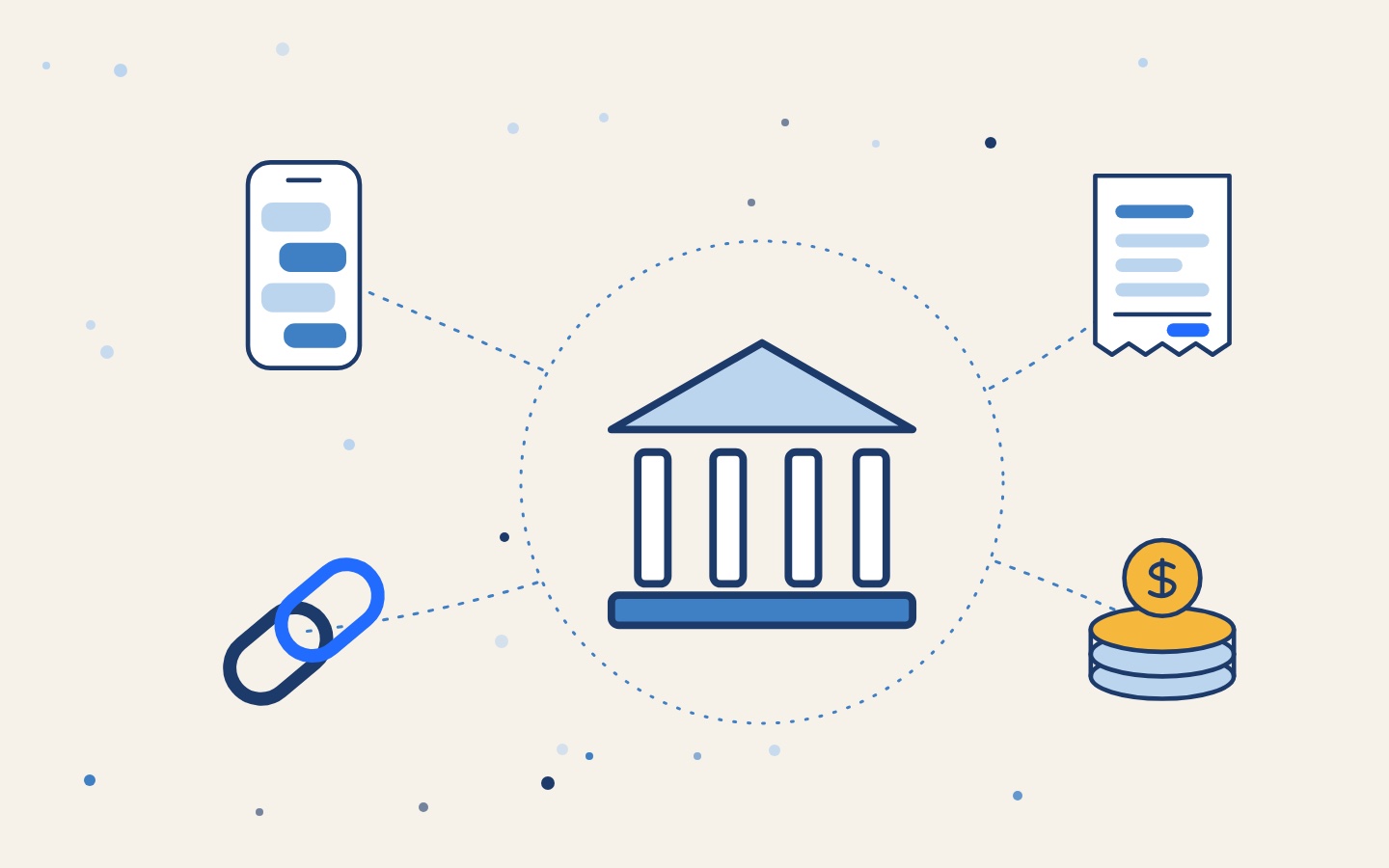
Banxico, Mexico's central bank, expects SPEI transfers to outnumber card payments in 2026. For anyone collecting from customers in Mexico, that makes a practical question urgent: how quickly you find out a customer paid and which invoice the money belongs to.
Cards have an advantage people take for granted. When the customer pays, the terminal or the gateway tells you who paid, how much and what for. A transfer does not. A deposit shows up on the bank statement with a description the customer typed however they liked, and someone in treasury has to guess whose it is.
The real problem is reconciliation
In many companies the transfer collection flow looks like this: the customer sends a transfer, texts a photo of the receipt on WhatsApp, a rep forwards it to treasury, treasury looks for the deposit in online banking and someone applies it by hand in the ERP. Every step is a chance to lose a payment or apply it to the wrong customer.
If transfer volume keeps growing, that flow stops scaling. What worked with twenty payments a day does not work with two hundred.
Three ways to know who paid
There are three approaches we use, from simplest to most complete.
A reference per customer or per document
You give the customer a numeric reference that identifies their account or invoice and ask them to type it in the transfer description or reference field. It is cheap and it works as long as the customer types it correctly, which does not always happen.
One CLABE per customer
Several banks and payment providers let you assign a different CLABE (Mexico's standardized bank account number) to each customer. Everything that comes into that CLABE belongs to that customer, whatever they type in the description. It is the cleanest option for recurring collections, and it is what Recaudo's collection agents send when a customer asks to pay by transfer.
Payment link
You generate a link for each charge with the amount already set. The customer chooses how to pay and the system receives the confirmation with the document already identified. It works well for one-off charges and for customers who would rather not type bank details.
What has to happen after the payment
Identifying the payment is half the job. The other half is getting the money to the right place on its own:
- The payment is applied to the invoice or contract in the ERP without anyone typing it.
- If the operation requires it, the CFDI payment complement is issued.
- The customer gets a confirmation on the same channel where they were charged.
- Payments that could not be identified land in a queue with an owner.
That last point is the one most often forgotten. There will always be deposits without a reference; what matters is that someone reviews them every day, not at month end.
CoDi and DiMo
In 2026 Banxico also published rules to promote CoDi and DiMo, which run on the SPEI network and aim to make paying from a phone easier, even without typing a CLABE. It remains to be seen how quickly banks and customers adopt them. My advice is to get your system ready to receive SPEI payments with automatic identification; whatever runs on top of that network will benefit from the same work.
Where to start
If your transfer collections depend today on photos of receipts, start by measuring how many deposits a month are applied by hand and how long they take. With that number you can decide whether references are enough or whether a CLABE per customer connected to the ERP is worth it.
How many days does your company take today to apply a transfer? If you do not know, that is the first number worth getting.