Gartner warned that more than 40% of agentic AI projects would be cancelled before 2027 because of costs or value nobody could explain. That does not surprise me. Getting an agent to work in a demo is easy; getting it to answer real customers every day takes a different kind of work, and almost nobody budgets for it.
These are the causes I would check first if your pilot has been stuck for a while.
There was no process behind the pilot
"We want an agent that serves customers" sounds like a project, but it is missing the main thing: a task with an owner. Compare it with "we want the agent to tell a customer how much they owe, send their payment link and record the promise to pay". That task has a start, an end and a person who does it by hand today, so it can be measured.
Once the task is well defined, the important questions show up on their own: which system the balance comes from, what happens if the customer says they already paid, who steps in when the agent does not know. If those questions have no answer for a person, they will not have one for a model either.
The demo used clean data
Demos are built with ten test customers, all with full names, correct phone numbers and up-to-date balances. The real database has duplicate prospects with the same phone number, names with and without accents and records with zero amounts that someone entered to get past a screen. We have seen this in systems we built ourselves.
An agent connected to that database inherits all of its problems. So before expanding a pilot, we review the data it will read with the same care we would use for an audit. Most of the time something has to be fixed in the source system before anything is fixed in the agent.
Nobody decided when a person takes over
An agent that answers everything is a risk. One that does not know when to hand the conversation to a person is worse, because the customer gets stuck in a loop of polite replies that solve nothing.
In Recaudo, our WhatsApp sales and collections product, the inbox is shared by the agent and the team. If a rep joins the conversation, the agent steps aside. That rule looks small, and it is the one that gives an operations director the most peace of mind, because there is always a way out.
The cost was never calculated with real volume
In the demo every answer costs cents and nobody does the math. In production the cost depends on how many conversations there are each month, how many messages each one has, which model is used and what the channel charges. With WhatsApp, Meta also changed how service messages are billed in 2026, so a calculation made last year probably no longer holds.
If the project does not have a sheet with the cost per resolved conversation compared with what that same task costs today, it will be one of the first to go when the budget gets cut.
What we do differently
At Zygnus we run agents in production in Recaudo, which has passed 2.3 million messages for businesses in ten countries, and in systems for clients. The order we follow is boring on purpose:
- We pick a single task with an owner and measure how it is done today.
- We review and clean the data the agent will read.
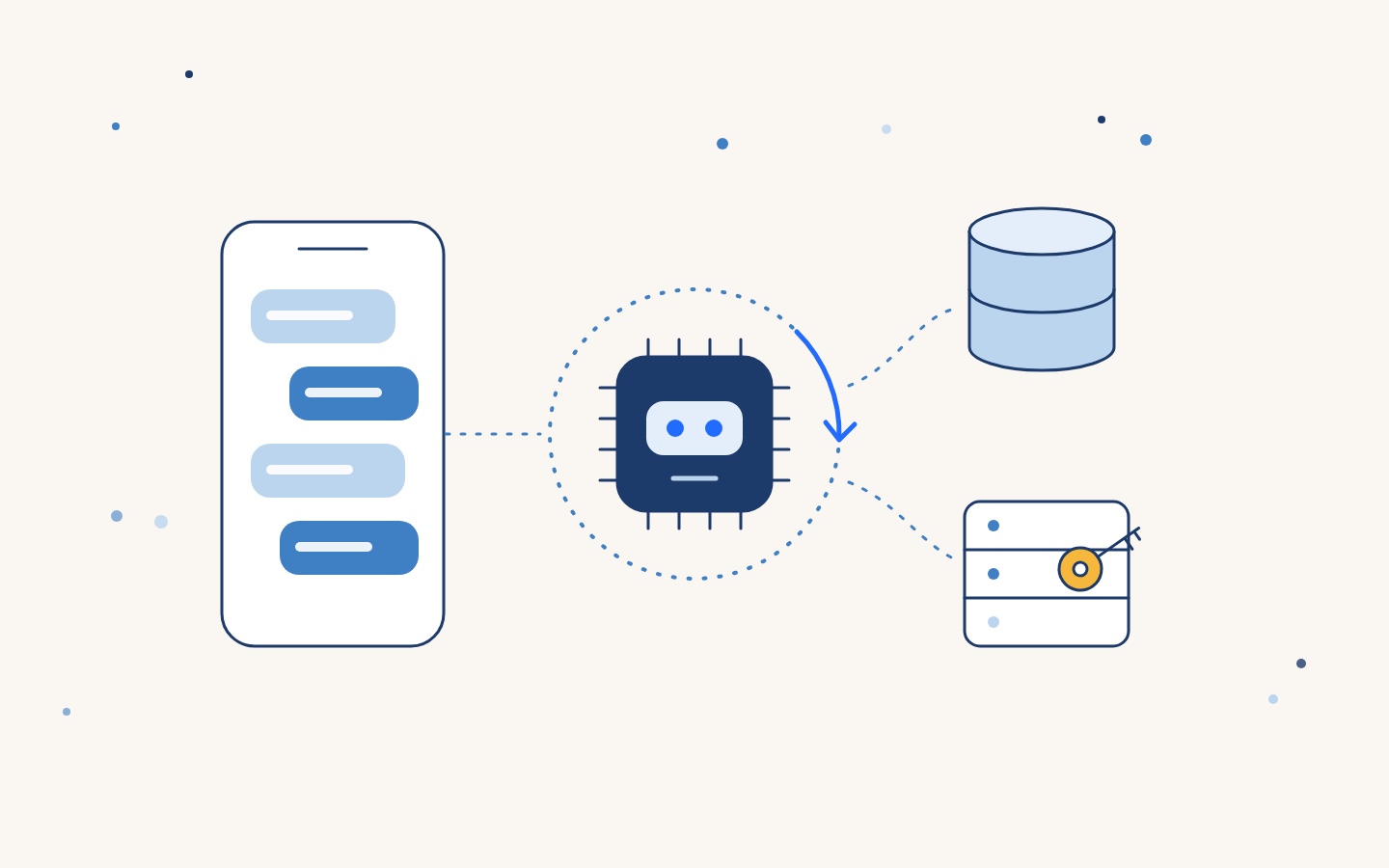
- We define what it can read, what it can change and when it hands the conversation over.
- We turn it on with a small group of real customers and compare against the first measurement.
- Only if the numbers hold do we move to the next task.
None of this is new. It is the same discipline I would use to roll out an ERP or change a pricing policy, which is what I have done for fifteen years. What is new is that with agents the temptation to skip it is bigger, because the demo looks so good that it feels finished.
I wrote more about the design mistakes we ran into in four things I would check before connecting an AI agent to your data. And if you have a stalled pilot, tell me which of these points it got stuck on. Often it can be rescued with a smaller task.